10 ARC Raiders Survival Tips for Safer Extractions
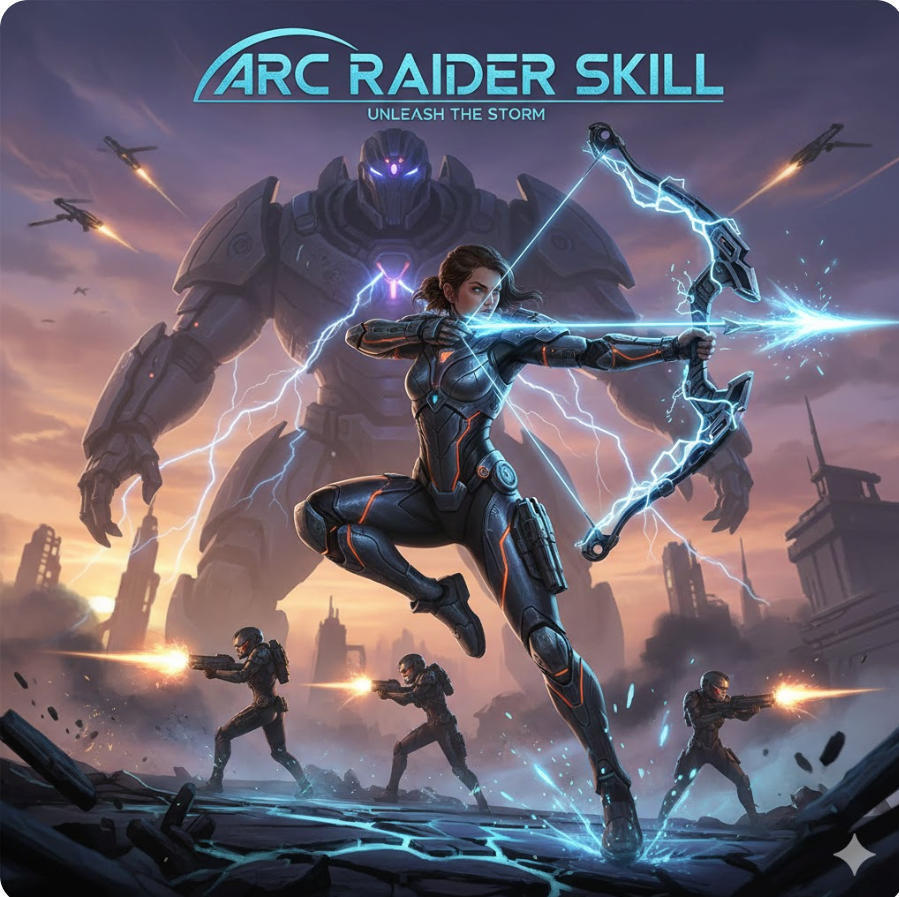
Every veteran ARC Raider has a set of habits they've internalized so deeply they've forgotten they learned them. These aren't secrets — they're patterns that experience quietly teaches, and that new players can consciously adopt to collapse months of trial-and-error into weeks. Here are ten survival techniques that experienced Raiders apply automatically but rarely explain.
01 Count Enemy Bullets — Know When They're Reloading
Every weapon in ARC Raiders has a magazine size. When you're in a firefight, count the shots your opponent fires. When they've emptied their magazine, they must reload — and that's your push window. Aggressively advancing while an enemy reloads forces them to either cancel the reload to fight back (losing the reload) or complete the reload while you're closing distance (losing ground). Most players don't count — you will have a decisive information advantage over them.
In practice, start with enemy weapon types you encounter most. Learn those magazine sizes first. You don't need to count every weapon in the game — just the common ones. Over time, counting becomes automatic.
02 Save Your First Healing Item for After Combat, Not During
The instinct to heal when you take damage is natural and wrong. Healing mid-fight is almost always a mistake in ARC Raiders. The healing animation takes time, leaves you stationary, and in most fights the enemy's damage output will outpace the healing. You heal, get shot again, and wasted the item.
The correct protocol: break line of sight first, create distance or get into full cover, then heal. The 3–5 seconds you spend behind cover healing is far safer than trying to heal while bullets are landing. Learn to tolerate low health during active combat — it's terrifying but correct.
03 Use ARC Enemies as Early Warning Systems
ARC enemies react to nearby players, not just you. When ARCs near you suddenly change behavior — become alert, change patrol direction, or start calling out detections — another player has entered their detection range. You've just received free intelligence about a nearby Raider without any risk to yourself.
Listen for ARC enemy audio changes. A Scout ARC that was patrolling passively switching to an alert scan tone means something has entered the area. Position accordingly: use the ARC as a buffer between you and the incoming player, or start moving toward extraction while the ARC distracts the other Raider.
04 Never Loot in the Spot Where You Killed
When you kill an enemy — ARC or player — your instinct is to loot immediately. Veterans move the engagement zone before looting. Step 5 to 10 meters away from the kill site, get into cover, then loot from a defensible position. Two reasons: the gunfire that killed your enemy was heard by others nearby, and your enemy's teammates or a third-party Raider will be heading toward your last known position.
If it's a player kill, their squad may have pinged the death location and be rushing in. Looting a dead player's inventory at the kill site is one of the most predictable and exploitable behaviors in ARC Raiders.
05 The Edge of the Map Is Your Friend
Open map interior means threats from 360 degrees. Map edges reduce your threat exposure to 180 degrees or less. When you're running a loot circuit or moving to extraction, hug the map boundary when possible. You only need to watch one half of the world, which means better situational awareness and less cognitive load during high-stress moments.
This also applies within buildings: keep your back to walls. Never stand in the center of open rooms. Position yourself where the only angles enemies can approach from are in front of you.
06 Fake a Retreat to Bait an Aggressive Push
Against aggressive players who push relentlessly, a controlled fake retreat is one of the highest-value counters available. Sprint away noisily — making your retreat obvious — then stop behind hard cover rather than continuing to run. The aggressor hears your "fleeing" footsteps, concludes you're running, and pushes confidently expecting to catch you in the open.
Instead, you're waiting. Their aggression becomes their undoing. This technique works because aggressors who've committed to a push have tunnel vision on the chase. They stop reading the environment and focus on catching you. Give them the illusion of the catch and turn it against them.
07 Sprinting Is Loud — Walk When Stealth Matters More Than Speed
New players default to running everywhere. Veterans toggle movement speed based on information priorities. When you know where threats are and need to cover distance fast, sprint. When you're in a building or contested area where position information is uncertain, walk.
Walking in ARC Raiders drastically reduces your audio footprint. Players who are listening for you may not register a walking Raider at all while clearly hearing a sprinting one from two rooms away. The few extra seconds of travel time are worth the information advantage of approaching silently.
08 Check Your Extraction Route Before Engaging Any Fight
Before pulling the trigger on any significant engagement, ask yourself: "If this fight goes poorly, how do I get to extraction from here?" If you can't answer that in under two seconds, you haven't thought through the engagement enough. Fights that block your extraction path are the most dangerous fights in ARC Raiders — winning doesn't help you if you're now trapped between your position and extraction.
Plan every fight with its aftermath in mind. Where does the engagement zone sit relative to your exit? Are there choke points between you and extraction that enemies could exploit after the fight? Pre-planned post-fight movement is what separates consistent extractors from consistent deathers.
09 When Outgunned, Use the Environment
Direct weapon fights are won by the better-armed player. Environmental fights are won by the more aware player. When you're outgunned — taking on better gear or a numbers disadvantage — stop thinking about the direct fight and start thinking about the environment.
Explosive barrels create area denial. Unstable structures can be collapsed. Chokepoints neutralize numbers advantages. Vertical movement creates angles that flat ground fighting doesn't support. The player who knows the environment and uses it creatively consistently beats the player with better gear who approaches every fight the same way.
10 Manage Your Heartbeat — Breathe Before Every High-Stakes Moment
This sounds psychological because it is. ARC Raiders is a high-stress game and stress affects mechanical performance: aim wobbles, decisions become reactive rather than deliberate, and time pressure creates mistakes. Veterans have learned to pause for one breath before every high-stakes engagement.
Before pushing a door, before initiating a PvP fight, before entering a hot zone — one deliberate breath. It resets your nervous system, slows your perception slightly, and brings your decision-making back to intentional rather than reactive. The players who stay calm under pressure in this game are not superhuman — they've learned to create small reset moments that give their cognitive systems time to function properly.
The Survival-Optimized Skill Build
These ten tips are most effective when backed by a skill tree that supports sustained raiding rather than peak combat performance. The following build is designed for Raiders who want to maximize survival consistency across many runs.
Sustained Raider Build
20 Mobility / 30 Survival / 25 Conditioning — Optimized for consistent extraction across many runs rather than peak single-fight performance.
- Field Medic (Survival) — Faster post-combat healing; enables the "heal after cover" protocol
- Quick Loot (Survival) — Less time exposed during looting = lower ambush window
- Solid Foundation (Conditioning) — HP buffer absorbs the occasional mistake
- Marathon Runner (Mobility) — Sustain escape routes and extraction runs
- Stamina Reserve (Conditioning) — Consistent stamina for dodge rolls and sprints to cover
Frequently Asked Questions
Do these tips work for solo play specifically?
Yes — in fact, several of these tips (Tips 3, 5, 8, and 10 especially) are most impactful for solo players who have no teammate to cover angles or provide backup. Solo Raiders have higher information demands and higher stakes for each decision. These habits were largely developed by experienced solo players.
Which of these tips has the biggest single impact?
Tip 4 (never loot in the kill spot) and Tip 8 (check extraction before engaging) consistently produce the largest immediate improvement for players who don't practice them. Both prevent the class of deaths that feel "unlucky" but are structurally predictable. Implement both immediately.
How long does it take to internalize these habits?
Most players report that 2–3 focused sessions of consciously applying one tip at a time is enough to establish the habit. Don't try to implement all ten simultaneously — pick the two most relevant to your current failure pattern and work on those first. Once they become automatic, move to the next two.